

Define your ICP
The goal of this assignment is to define a detailed and actionable Ideal Customer Profile (ICP). A well-defined ICP helps generate more targeted leads, optimize marketing and sales efforts, and ultimately increase revenue predictability.
An Ideal Customer Profile is a detailed description of the type of company that benefits most from your product or service. It is based on firmographic and technographic data such as company size, business model, geographic presence, and go-to-market setup. Defining your ICP is a fundamental step toward a revenue-driven marketing and sales strategy.
At LeadHQ, we focus on what really matters: revenue and customer lifetime value. Our commercial strategies are centered on the principle that a small percentage of customers typically generate the majority of revenue. Without a sharply defined ICP, teams risk prioritizing quantity over quality. While many leads may show initial interest, only those that closely match the ICP are likely to convert into long-term, high-value customers.
A clear ICP also helps reduce churn and increase customer lifetime value. By focusing on the right accounts, you strengthen your growth flywheel, where satisfied customers stay longer, expand usage, and become advocates for your brand.
Analyze your Current Customer Base
Analyze which clients get the most value from your product or service. These are typically customers with high satisfaction, strong profitability, and long-term partnerships. Understanding what makes these customers successful helps clarify what is most valuable to the business.
Next, analyze these top customers to identify shared characteristics. Look for common patterns across company size, business model, geographic location, sales setup, and revenue structure. A data-driven ICP is created by combining these shared attributes, such as:
-
Industry or business model
-
Geographic location
-
Company size (number of employees)
-
Go-to-market motion (sales-led vs product-led)
-
Estimated annual revenue and customer lifetime value
-
Sales team structure
-
Core growth challenges and pressure points
Our Ideal Customer Profile
Company Description
LeadHQ targets B2B companies with a sales-led go-to-market motion that depend heavily on outbound and proactive revenue generation.
These companies typically have:
-
Western-based sales representatives, where sales talent is expensive and performance expectations are high
-
At least two sales-related team members, indicating an established sales function rather than founder-led selling
-
A large Total Addressable Market, typically thousands of potential buyers or more
-
High Customer Lifetime Value, with a minimum CLV of €10,000
-
Constant pressure to bring in new customers, driven by ambitious growth targets or a business model with inherent churn
-
No dedicated internal GTM team, meaning targeting, messaging, outbound execution, and sales enablement are not systemized internally
These companies feel strong revenue responsibility but lack the internal structure, tooling, or expertise to consistently generate pipeline at scale.
Geographic Focus
LeadHQ operates internationally, with a current focus on companies based in Eastern United States and Western Europe. This geographic focus reflects where LeadHQ has seen the strongest traction and fastest deal velocity.
Current Industry Focus
At present, LeadHQ primarily works with non-PLG SaaS companies, as this segment has shown the strongest initial traction. However, the ICP is intentionally designed to be industry-agnostic, allowing expansion into other B2B industries that share the same commercial characteristics, sales complexity, and growth pressure.
Pain Points
-
High cost of sales talent with inconsistent or unpredictable pipeline results
-
Lack of a repeatable outbound motion that reliably delivers qualified opportunities
-
Pressure to grow revenue without significantly increasing headcount or fixed costs
-
Limited internal GTM expertise, leading to fragmented tools, messaging, and execution
Buyer Personas
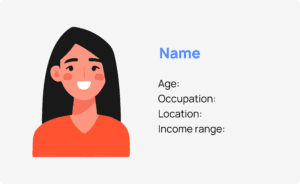 Buyer personas represent the individuals who buy, influence, or champion the solution internally. For LeadHQ, the primary persona sits close to revenue ownership and has direct influence on go-to-market decisions.
Primary Persona: Commercial Leader
Role: Revenue owner and decision maker
Typical titles include Sales Director, Commercial Director, Head of Sales, and Chief Commercial Officer (CCO).
Role in the buying process: Economic buyer or strong influencer with final sign-off authority or decisive influence on vendor selection.
Responsibilities include owning pipeline and revenue targets, scaling sales output efficiently, and ensuring sales teams focus on the right accounts and opportunities.
Key challenges include expensive sales teams that need consistent pipeline support, lack of internal capacity to build and maintain a structured GTM engine, and difficulty turning outbound into a predictable, scalable channel.
What the Commercial Leader is looking for is a reliable way to generate qualified pipeline without hiring additional headcount, clear ROI and transparency into performance, and a partner that understands sales-led B2B growth and execution.
Marketing message:
Build a predictable outbound engine without adding internal complexity or headcount.
How to Create a Final Detailed Buyer Persona
For each persona, clearly describe their role in the buying process, including whether they are the decision maker, influencer, or economic buyer.
Identify their key challenges and success metrics, and map how your product or service directly contributes to solving those challenges. The strongest value propositions are the ones that tie directly to revenue impact, efficiency, and predictability
Questions to Consider When Creating Buyer Personas
-
What revenue or pipeline KPIs are they accountable for?
-
What commercial risks keep them up at night?
-
What internal resources do they lack?
-
Who do they report to?
-
What level of authority do they have in vendor decisions?