
Why Complex Tech Sales Do Not Require Experts at First Touch
One of the most common assumptions in complex B2B sales sounds logical on the surface: if the product is highly technical, only experts should speak to prospects.
This belief is especially strong in industries like medtech, clinical services, regulatory technology, and scientific platforms. When offerings take years to fully understand, delegating first contact to an SDR can feel risky.
Many founders and sales leaders worry that credibility will be lost, nuance will be missed, and prospects will disengage if questions are not answered in depth.
For a long time, this assumption went largely unchallenged.
Until it was.
The Fear: SDRs Cannot Handle Deeply Technical Sales
In a recent project with a founder in the medtech space, the concern was explicit.
The product was deeply technical. Sales conversations often involved complex regulatory and clinical considerations. The founder believed only internal experts could handle outreach without damaging trust.
An external SDR with no medtech background was seen as a non-starter.
The expectation was clear. Without deep domain expertise, first-touch outreach would fail.
What Actually Changed the Outcome
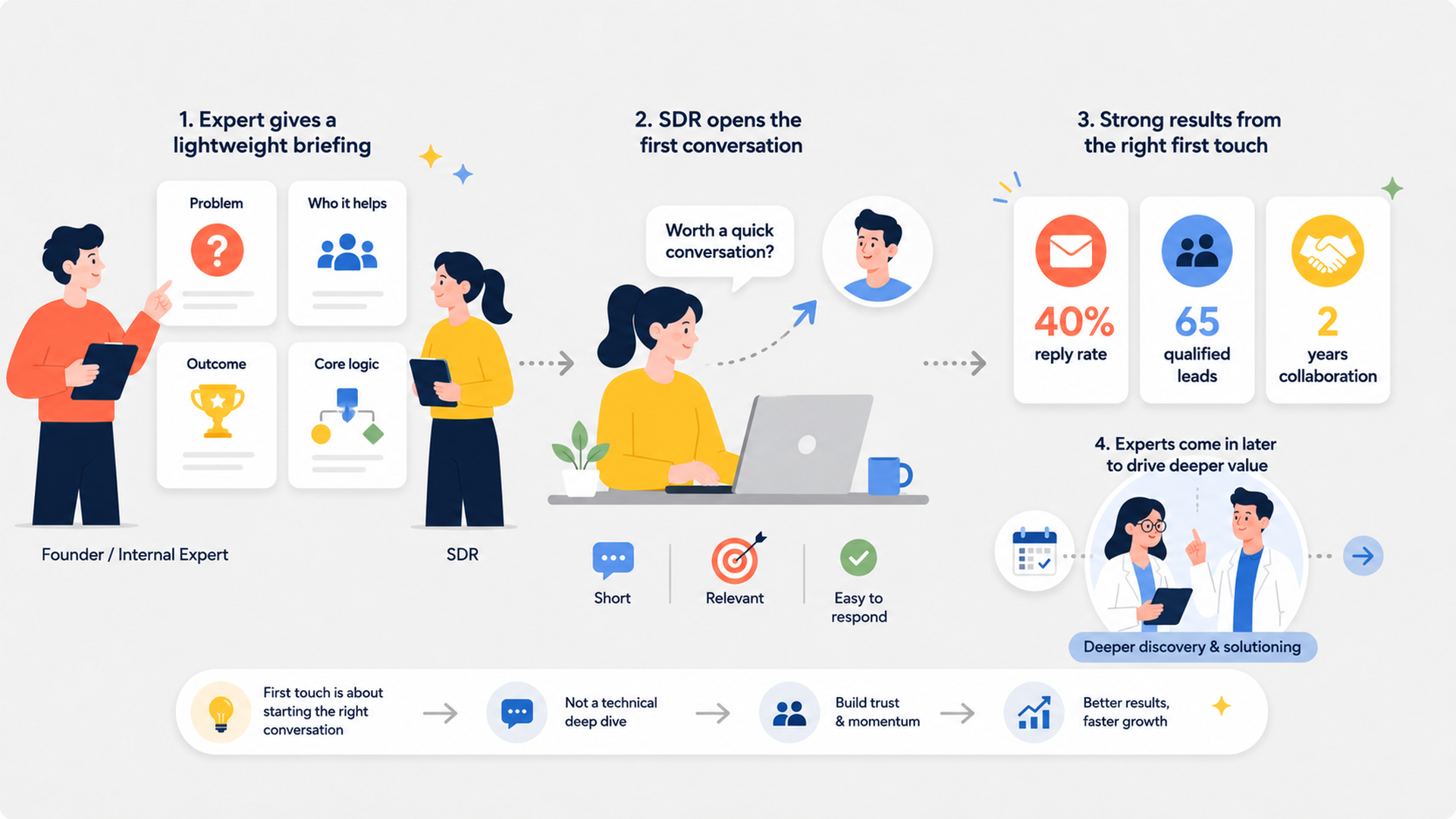
Instead of attempting to turn an SDR into a subject matter expert, the approach was intentionally limited.
The founder spent a few short sessions walking through the core logic of the service, the primary problem it solves, the type of companies it helps, and the outcomes prospects care about most.
There was no attempt to cover every edge case or technical detail.
The goal was not expertise. The goal was conversational confidence.
That turned out to be enough.
From Explaining to Opening the Door
With a clear but lightweight understanding of the offering, the outreach strategy changed.
The focus shifted away from explaining the product and toward starting the right conversation.
Outreach became short and conversational, focused on relevance rather than education, and designed to invite dialogue rather than deliver answers.
The SDR was not positioned as a technical authority. Instead, they acted as a credible first point of contact who knew when to bring in deeper expertise.
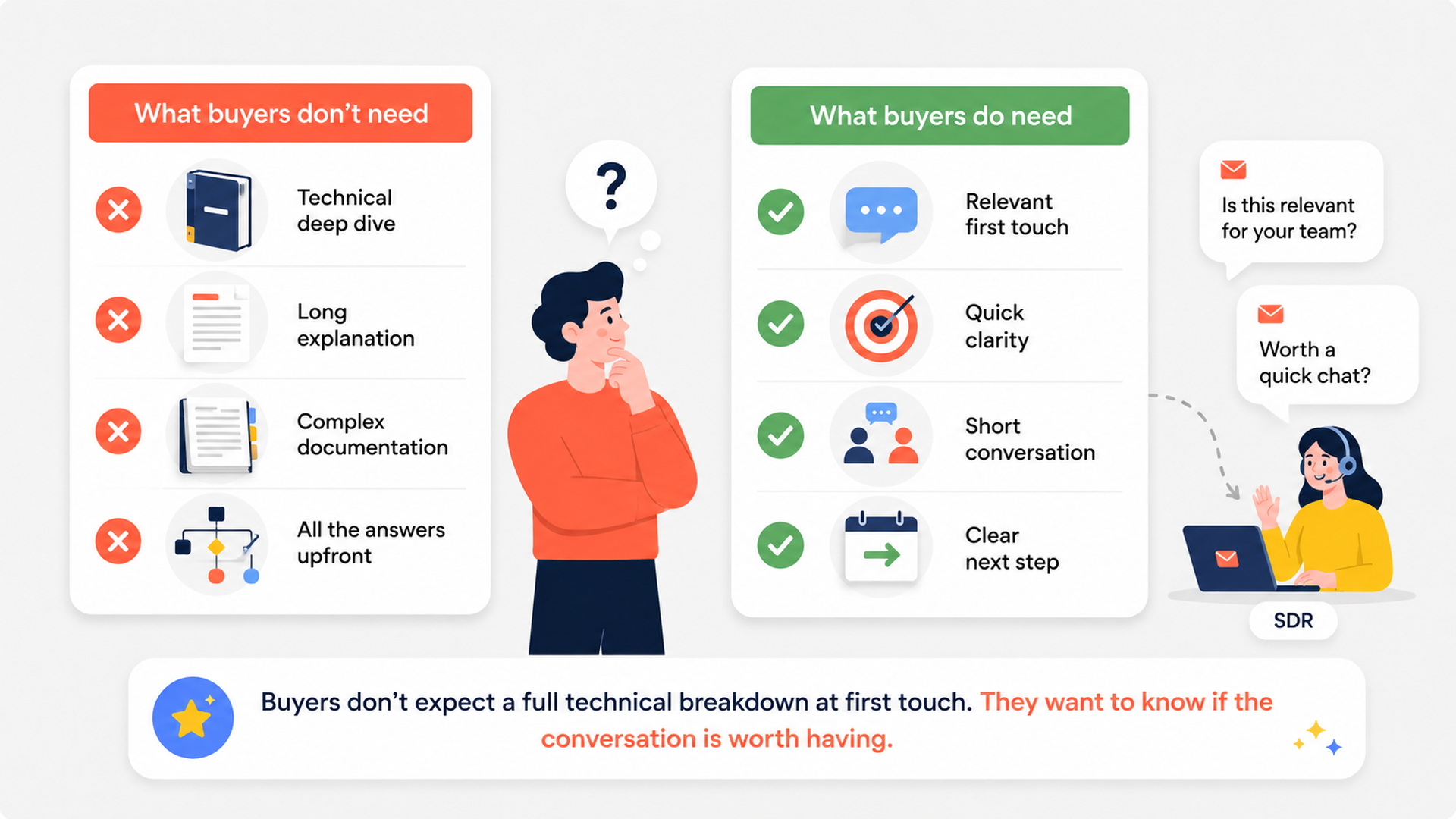
This mirrors how buyers actually behave. They do not expect a full technical breakdown in the first interaction. They want to know whether a conversation is worth having.
The Results
The shift delivered outcomes that challenged the original assumption.
Momentum was created without sacrificing credibility.
The Real Lessons for Sales Teams
Two insights stood out.
Lesson 1
Even the most complex technical services do not require an expert at first touch. They require someone who understands how to start the right conversation.
Lesson 2
With the correct setup and a collaborative founder or internal team, external or remote SDRs can create momentum that internal teams often do not expect.
Complex sales are not won by explaining everything upfront. They are won by guiding prospects into the right next conversation.
Rethinking First Touch in Complex Sales
This does not diminish the importance of expertise. Subject matter experts remain critical deeper in the sales process.
But using them for every initial outreach is often inefficient and unnecessary.
Separating conversation-opening from deep technical validation allows sales teams to scale outbound more effectively, protect expert time, increase responsiveness, and improve overall pipeline velocity.
The assumption that complexity requires expertise at every stage is understandable.
It is also increasingly inaccurate.
The more useful question for sales leaders is not whether SDRs can sell complex products.
It is whether first-touch outreach is being asked to do more than it should.
What is one assumption about selling complex products that turned out to be wrong in your experience?
First touch does not need to carry the whole technical sale. It needs to create enough relevance, trust, and clarity to earn the next conversation.
Book a discovery call